
News
International Labour Organization and the Executive Bureau Organize a Workshop on Just Transition and Climate Policy Development
23/02/2025
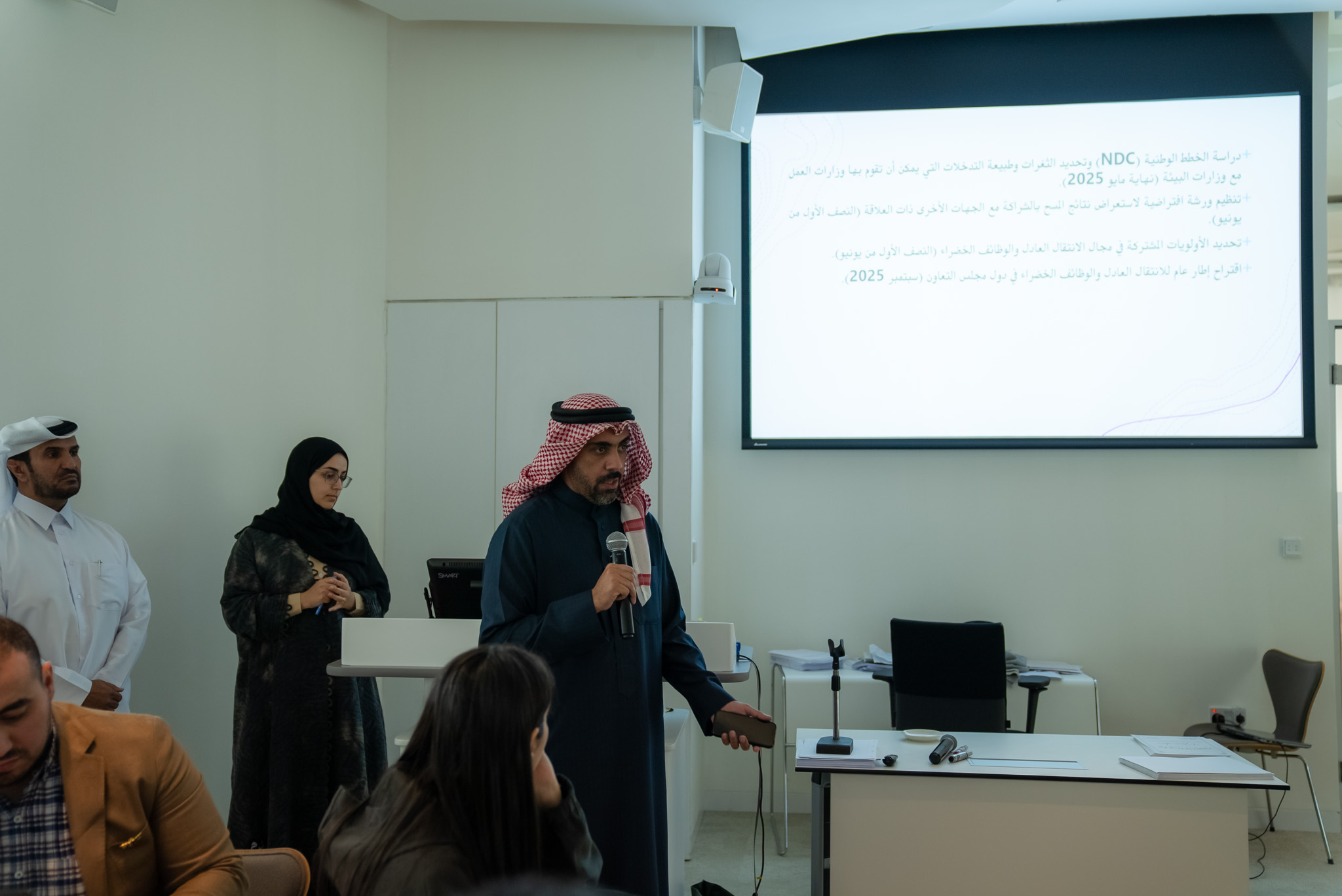
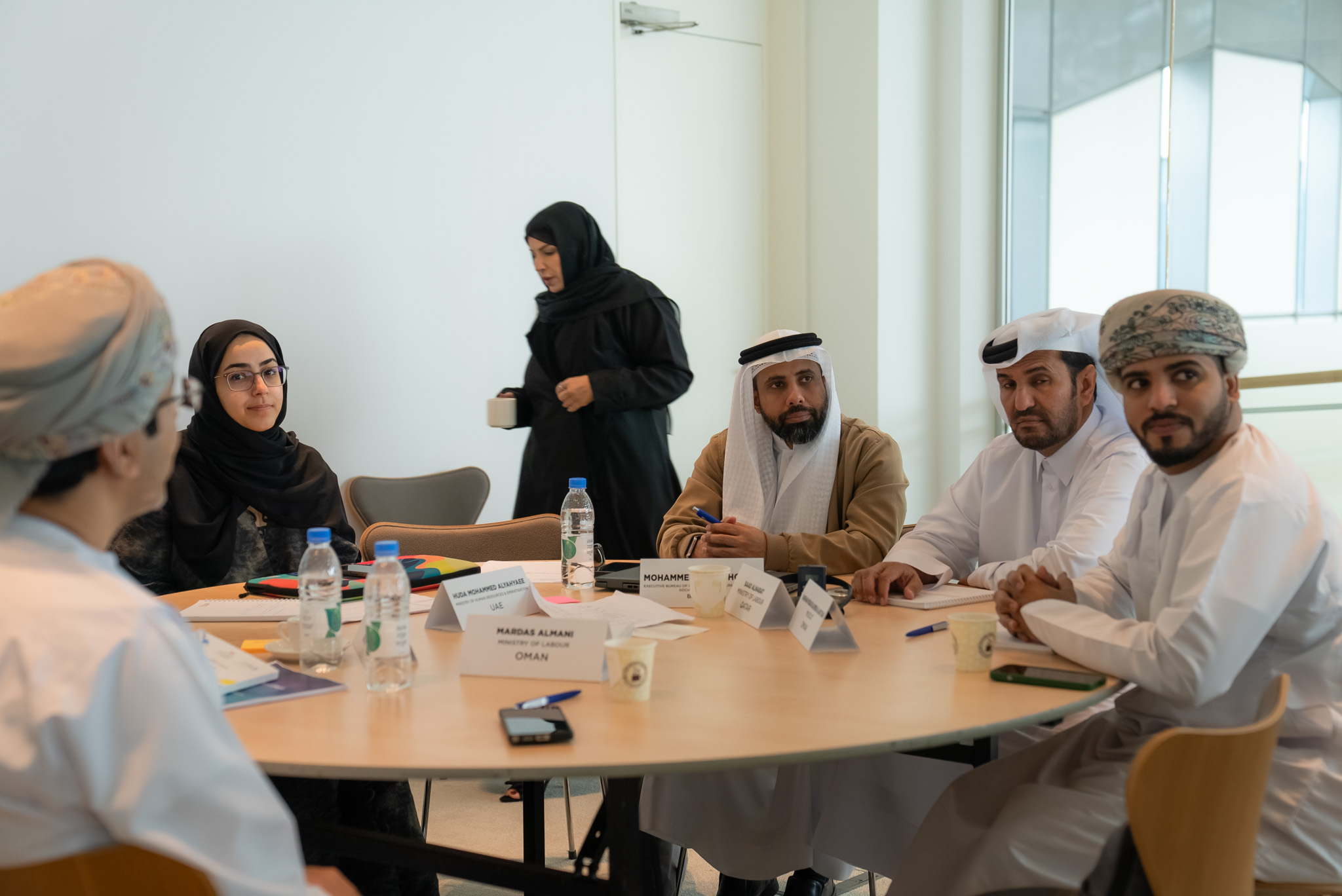
The International Labour Organization (ILO), in collaboration with the Executive Bureau of the Council of Ministers of Labour of the Gulf Cooperation Council (GCC) countries, organized a workshop titled “Just Transition and Climate Policy Development through Nationally Determined Contributions: A Peer Learning Approach.” The event was hosted by Hamad Bin Khalifa University in Doha, Qatar, in response to the directives of the GCC Ministers of Labour Committee, which emphasized the importance of studying this topic and formulating appropriate visions and policies.
The workshop aimed to empower governments, labor organizations, and employers to understand the impact of climate change on the labor market, analyze climate policies and their effects on employment opportunities and future skills, and enhance policies that ensure a just transition—one that protects the rights of all stakeholders in production and achieves economic and social sustainability. Additionally, the workshop discussed the impact of climate transformations on jobs in traditional sectors, noting that the shift toward a low-carbon economy may result in job losses. This challenge necessitates exploring solutions that mitigate such impacts through the development of policies supporting new job creation and the enhancement of workers’ skills.
The concept of a just transition was a central theme in the discussions, with the workshop highlighting the need to balance environmental transformation with the maintenance of economic and social stability. This balance can be achieved by providing decent jobs and retraining workers with new skills aligned with the requirements of a green economy. Emphasis was also placed on the role of green skills in facilitating this transition—through the development of competencies in renewable energy, sustainable construction, and environmental resource management—as well as on aligning training and educational curricula with the needs of the future labor market.
The Gulf Cooperation Council and the Ministries of Labour played a significant role in supporting this project. Gulf ministries actively participated in the workshop discussions, which initially spanned nearly three weeks via virtual communication before concluding with an in-person session in Doha from February 18 to 20, 2025. The workshop saw the participation of all relevant stakeholders from the Gulf and the Arab region. Extensive discussions enriched the workshop’s themes, enhanced the exchange of successful experiences and practices, and positively influenced its outputs and recommendations.
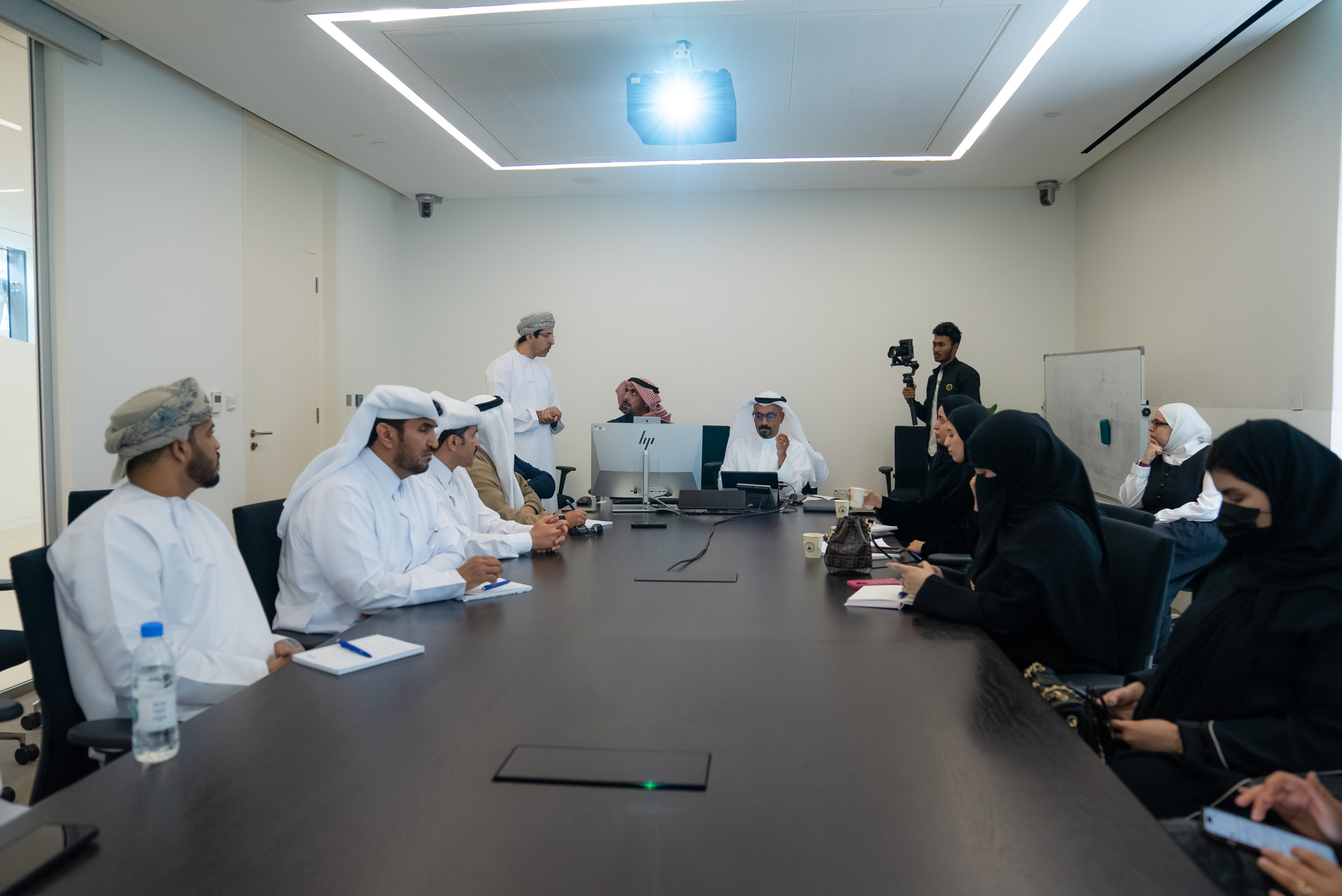
On the sidelines of the workshop, the Executive Bureau of the Council of Ministers of Labour of the GCC held a technical meeting with representatives from the GCC countries’ Ministries of Labour. The meeting aimed to discuss the topic from a Gulf perspective, thereby unifying visions and enhancing Gulf cooperation to ultimately adopt joint policies that support a just transition in the GCC countries.